What isArtJournaling?
A gentle introduction
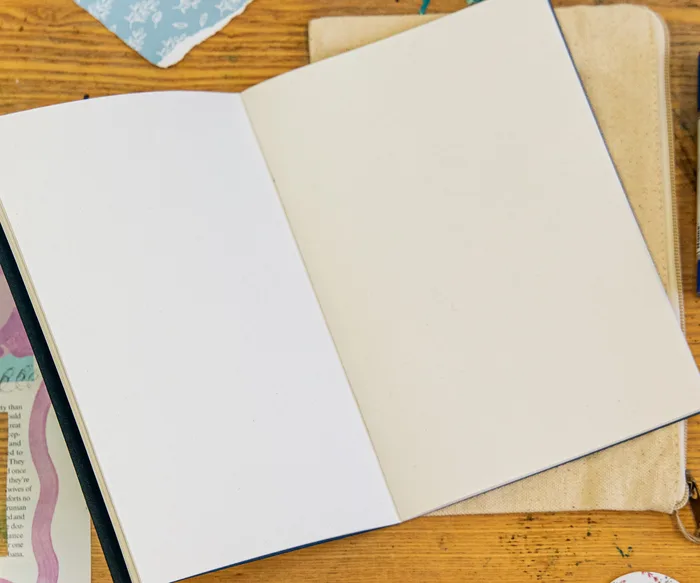
A journal with pictures as well as words — collage, paint, doodles, scribbles and scraps of writing, all in one place. It’s somewhere to play, and to notice how you’re feeling.
No rules. No skills needed. Just a page, and what you feel like putting on it.
Art journaling sits somewhere between a diary, a scrapbook and a sketchbook. Instead of neat entries, you build up pages in layers — a torn photograph here, a splash of watercolour there, a line of handwriting running off the edge.
Nobody else has to see it. The point isn’t to make something impressive; it’s to give yourself time, hands-on and screen-free, to slow down and see what comes up. Many people find it a gentle way to untangle their thoughts, especially the ones that are hard to put into words.
01
Gather something to cut up
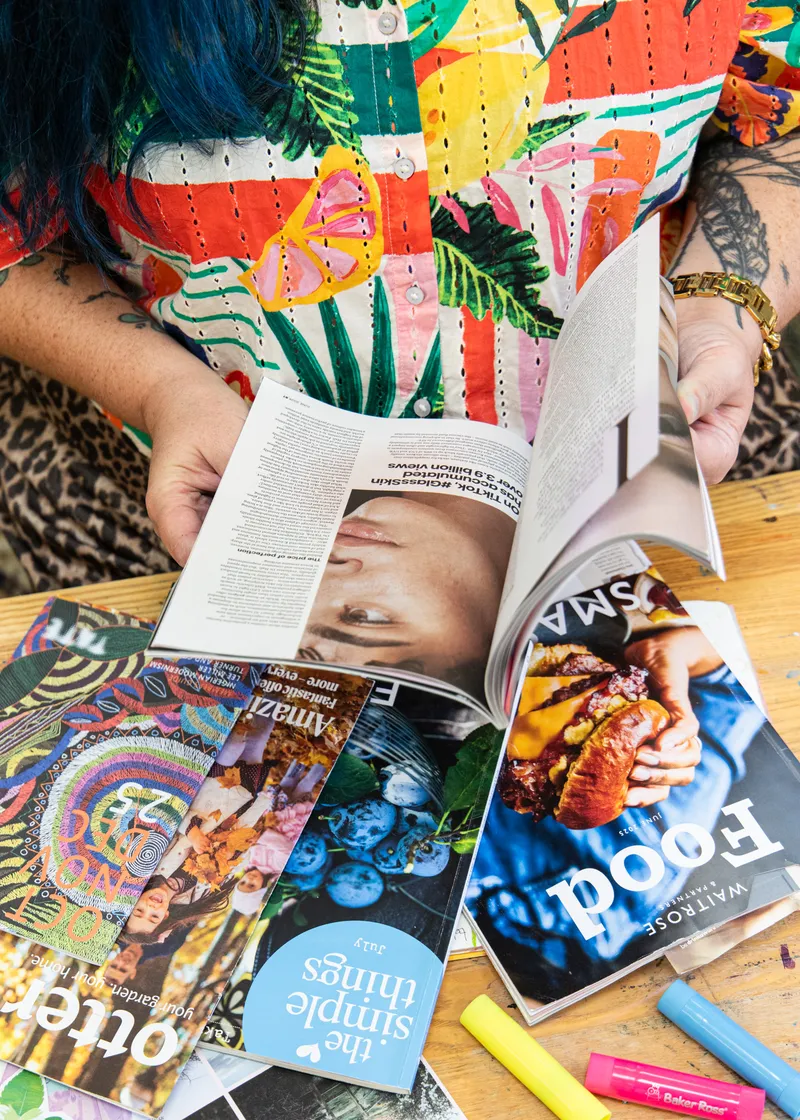
Old magazines, wrapping paper, book pages, junk mail. Flick through and tear or cut out whatever catches your eye — you don’t need to know why.
Colours, faces, a single word, a bit of texture. It all counts — and it’s often interesting to notice which pieces you’re drawn to.
02
Make a lovely mess
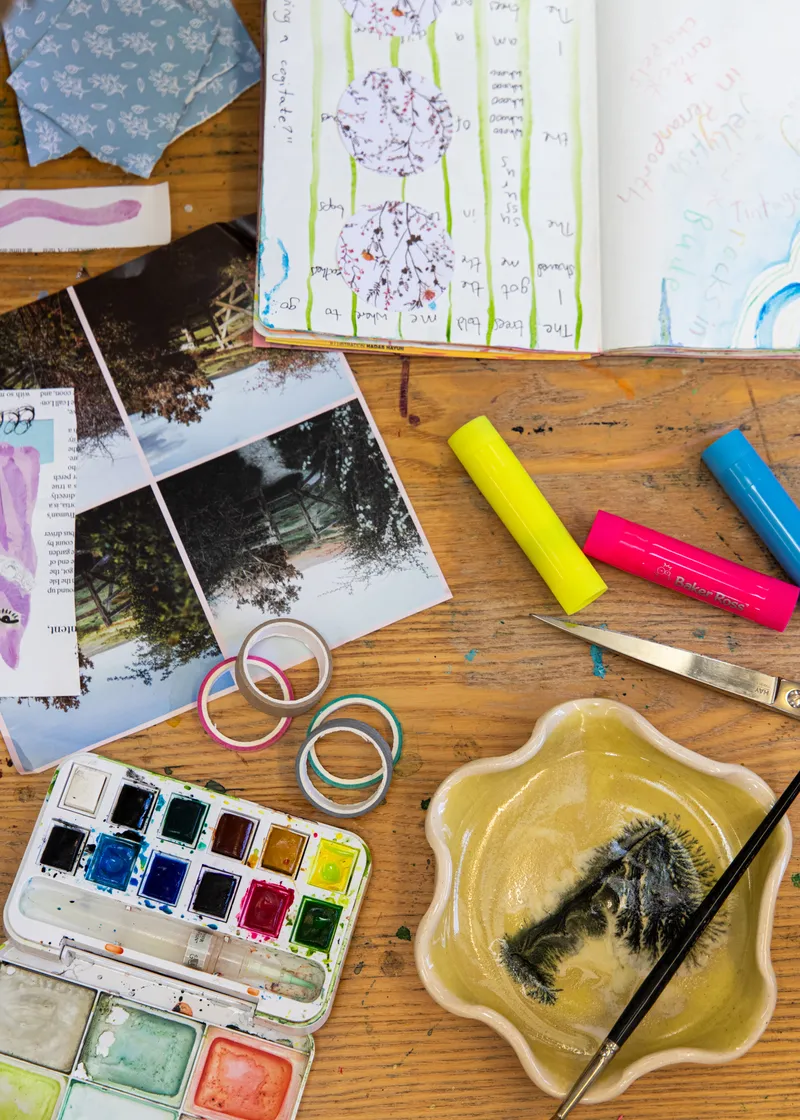
Stick things down, paint over them, write around them. A journal page isn’t a finished artwork — it’s a record of an afternoon, and sometimes of a mood you didn’t know you were in.
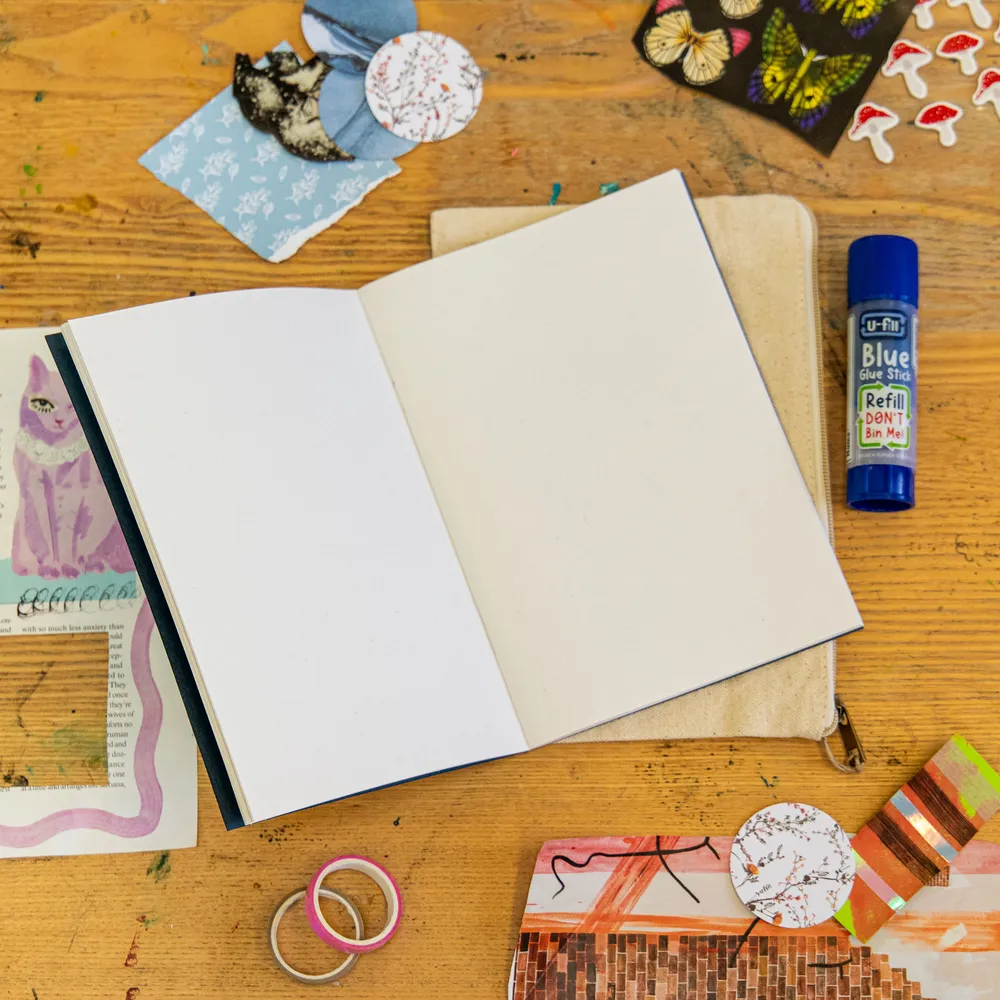
- Glue stick
- Scissors
- Washi tape
- Paint
- A journal
03
Notice what comes up
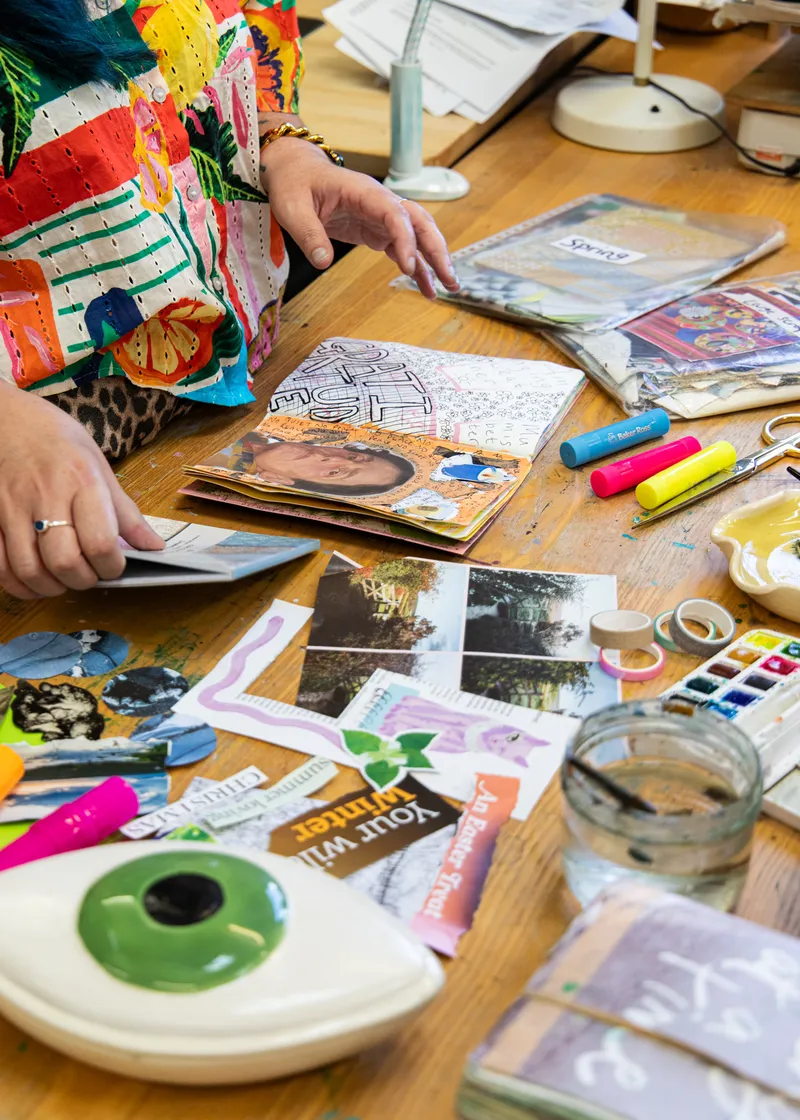
When you’re done, flick back through the page. You might spot a colour you keep reaching for, or a word that stuck. There’s nothing to decide or fix — just see what it tells you about where you are today.
Some people add a line or two of writing; others leave the page to speak for itself. Both are fine.
Why people love it
It’s calming
Cutting, sticking and colouring give your hands something to do and your mind a chance to wander. Lots of people find it soothing, a bit like a quiet walk.
It’s forgiving
Made a mess? Glue another page over it. Nothing is ever wrong in a journal, which makes it a kind place to be a beginner.
It’s yours
No audience, no grade, no right answer. A private space to express how things felt on the day, with or without words.
Common questions
I can’t draw. Is that a problem?
Not at all. Collage is a great way in because you’re working with ready-made images, and most journal pages use little or no drawing.
What do I need to get started?
A notebook, a glue stick, some scissors and something to cut up. Our collage kit has everything in one pouch.
How long does it take?
As long as you like — ten minutes with a cup of tea, or a whole afternoon.
Is art journaling the same as art therapy?
No. Art journaling is a creative practice that many people find soothing and reflective. It isn’t a substitute for therapy or professional support, though it can sit nicely alongside them.
Start with a blank page
Come along to an Art Club class, or take Art Club home with a collage kit or art journal. Either way, you’re giving yourself a little time to play and to check in with yourself.